
What Is Google Authority Stacking? Pros and Cons of Google Stacking

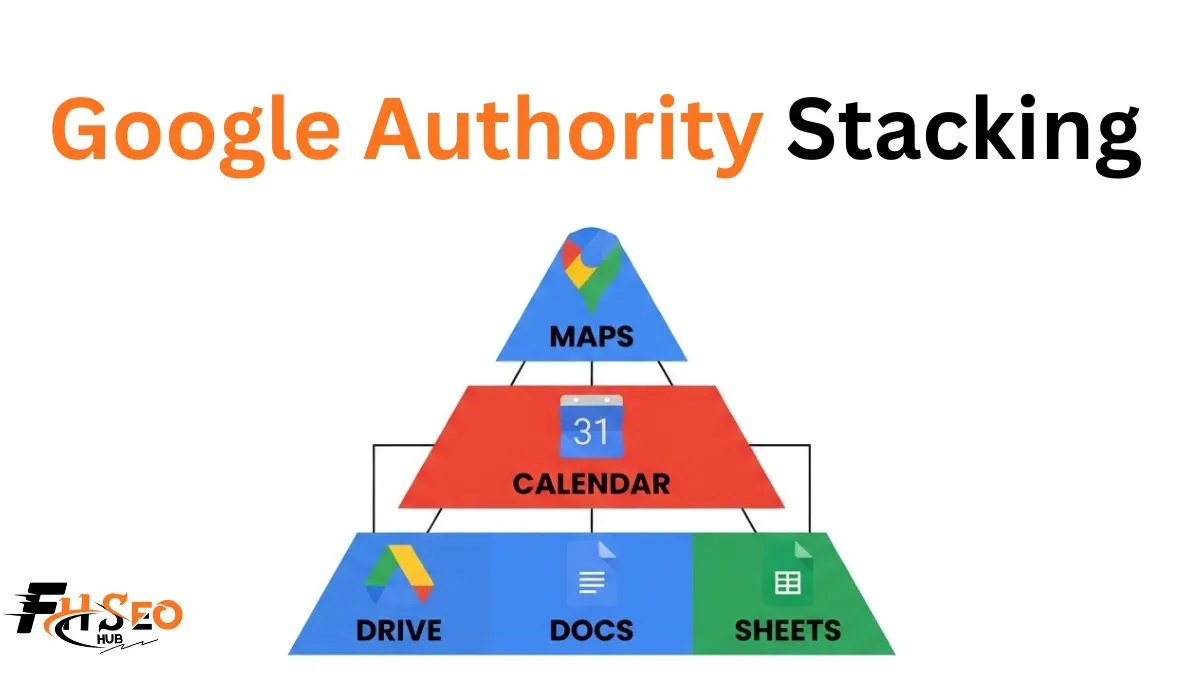
Google authority stacking is a link building technique that creates a network of pages across Google’s own free properties, Google Sites, Docs, Drive, Sheets, Slides, published to the web and interlinked. That network then points at a money site to try to pass Google’s own domain trust through to it.
What Is Google Authority Stacking?
Google authority stacking, sometimes called Google entity stacking, is the practice of publishing content across multiple Google-owned properties and interlinking them to create a network that ultimately links to a target website. The premise is that Google trusts its own domains more than third-party sites, so links flowing from Google-hosted pages carry stronger authority signals.
The mechanism resembles a private blog network built with free tools instead of purchased domains. Each Google property, a Site, a public Doc, a Drive folder, functions as a node in the network, carrying a link or two back to the others and eventually to the money site at the center. The pages themselves are usually thin, built to exist and link, not to serve an independent audience.
Is Google Stacking Black Hat or White Hat SEO?
Google stacking sits closer to black hat than white hat SEO when its pages exist purely to pass link equity rather than serve genuine users, since that’s the exact pattern Google’s link scheme and site reputation abuse policies target. A handful of individual tactics inside a typical stack, publishing a real Google Doc, creating an actual Google Site, aren’t inherently unethical SEO or against Google’s guidelines. The manufactured network built purely to manipulate rankings is, placing the full pattern well into grey-hat to black-hat territory depending on how it’s executed.
The classification depends entirely on purpose and pattern, not on which platform hosts the content. A real business using Google Sites to publish genuinely useful content isn’t doing anything wrong. A network of a dozen thin Google Sites pages built specifically to link to each other and a money site, with no independent reason to exist, fits the definition of a link scheme regardless of which domains host it.
Why Google Trusts Its Own Properties
The theory behind Google stacking assumes Google’s ranking systems inherently favor content hosted on Google’s own domains, since those domains carry high baseline PageRank and appear frequently in the Knowledge Graph and search results already. That baseline trust is real. What the theory misses is that Google’s spam detection operates independently of domain-level trust.
SpamBrain, Google’s AI-based spam detection system, evaluates link patterns, purpose, and content quality across a network regardless of which domains host the individual nodes. A Google Sites page built purely to pass link equity gets evaluated the same way a privately-hosted PBN page would: does this content exist for a genuine purpose, or does it exist to manipulate rankings. High domain-level trust doesn’t exempt a page from that evaluation. It just changes which domain the manipulation happens to sit on.
Google Properties Used in an Authority Stack
Properties commonly used in a Google authority stack include Google Sites, Google Docs and Sheets published to the web, Google Drive folders, Google Slides presentations, Google Forms, Blogger, Google Photos albums, and Google Calendar events, each capable of hosting a link and getting indexed independently. Google Sheets specifically gets used for data-driven pages, published spreadsheets dressed up as resources purely to carry a link. Google Maps and Google Business Profile sometimes get included too, though these carry a meaningfully different risk profile since they represent real business listings, not disposable entity authority nodes.
Most of these properties share a common trait that makes them attractive for this purpose: they’re free, fast to set up, and each one is a distinct crawlable URL that inherits some baseline trust from Google’s own domain. That same ease of creation is what makes a manufactured network of them look, to a detection system, exactly like what it is, a large batch of low-effort pages created in a short window for one purpose.
Benefits of Google Authority Stacking
The claimed benefits of Google authority stacking include fast indexing, since Google’s own crawlers prioritize Google-hosted properties, added link diversity in a backlink profile, and a lower cost than paid placements or PBN hosting since the properties themselves are free. These benefits are real in a narrow, short-term sense.
Fast indexing of a thin page built purely to link elsewhere doesn’t translate into genuine link equity once Google’s quality and spam systems evaluate the page’s actual purpose. Link diversity built from a single coordinated network isn’t the kind of diversity that improves a backlink profile’s credibility, and a batch of near-identical thin pages published at once starts to resemble the same duplicate, low-value content pattern Google’s quality systems already watch for. The cost savings are real, but cost isn’t the variable that determines whether a tactic is worth the risk.
How to Create a Google Authority Stack (Step-by-Step)
That network is the exact pattern Google’s spam policies exist to catch, and walking through how to construct one wouldn’t change that risk regardless of how carefully it’s described. What’s worth building instead is genuine entity presence. That means a real, complete Google Business Profile if you have a physical or service-area business, a real YouTube channel if you produce real video content, and a real Google Sites page only if it hosts content genuinely worth publishing on its own.
Treat each Google property you use as something that needs to justify its own existence independent of the link it might provide. A Google Doc published to the web should be a genuinely useful resource, a template, a guide, a dataset, not a placeholder built around an outbound link. That standard alone filters out most of what a manufactured stacking network looks like.
Link Structure Best Practices: Why You Should Use a Buffer Site
A buffer site sits between a manufactured link network and the money site specifically to obscure the connection between them from detection systems, and that’s a red flag pattern, not a best practice worth recommending. Adding an intermediary layer to make a manipulative network harder to trace back to its beneficiary is a detection-evasion tactic, and current link graph analysis is built specifically to identify exactly this kind of structural pattern.
The genuinely defensible version of link structure has nothing to do with buffering a manufactured network, and it doesn’t resemble parasite SEO either. It means building a real backlink profile with diverse, relevant, editorially-earned links and natural anchor text distribution, and using tiered link building only in its legitimate form: genuine external mentions pointing to real content assets you’ve built, not throwaway pages built to launder a connection. If a link structure’s main purpose is making a pattern harder for Google to trace, that’s the signal it needs rethinking, not reinforcing.
Google Stacking for Reputation Management
Google stacking gets pitched for reputation management by building a network of Google properties stuffed with a person or company’s name, aiming to push negative search results further down the page. This use case carries more risk than link building alone, since it can suppress legitimate information, complaints, news coverage, public records, rather than just manipulating a ranking signal.
Genuine reputation management works differently and more durably. It means building real, substantive positive content that gives search engines and readers something genuinely worth ranking: case studies, a real Google Business Profile with a complete, honest history, expert commentary, and direct, transparent responses to legitimate criticism. Reputation repair built on genuine substance outlasts a manufactured page network, since the network only works as long as it stays ahead of both Google’s detection systems and public scrutiny, and neither of those get easier to outrun over time.
Risks and Penalties: Does Google Penalize Stacking?
Google penalizes stacking through the same mechanisms it penalizes any other manufactured link network: a manual action if a human reviewer flags the pattern, or algorithmic devaluation through SpamBrain if the pattern gets caught automatically. Individual Google properties in a stack can also get taken down independently for violating that specific product’s own terms of service, unrelated to any search penalty.
A manual action shows up explicitly in Search Console and requires cleanup, including removing or disavowing the manipulative links, and a reconsideration request to resolve. That process commonly takes several weeks to review once submitted, sometimes longer for severe or repeat violations. Algorithmic devaluation is quieter and, in practice, harder to recover from on any predictable timeline, since there’s no formal review process and Google’s systems need to relearn that a site complies with policy over a period that can run into months. Either way, Domain Authority or any other third-party metric offers no protection once flagged, a Google Sites page carries no inherent immunity once its purpose is identified as manipulative.
Does Google Stacking Still Work in 2026?
Google stacking increasingly doesn’t work as originally pitched in 2026. SpamBrain’s pattern and purpose evaluation applies to Google-hosted properties the same way it applies to any other network, and the risk-reward balance has shifted further against manufactured link networks since detection systems improved through 2024 and 2025. Any short-term ranking movement a stack produces tends to be temporary and increasingly hard to reproduce reliably.
The properties themselves aren’t the problem, and that’s the nuance most content on this topic misses. A real Google Business Profile still works exactly as intended. A real Google Sites page with genuinely useful content still gets indexed and can still rank. What’s stopped working is the manufactured version: thin pages built purely to interlink and pass equity, regardless of which free platform hosts them.
Google Stacking vs. Entity Reinforcement (GBP, My Maps, Knowledge Graph)
Google stacking and entity reinforcement use some of the same platforms but serve fundamentally different purposes. Stacking manufactures a link network for ranking manipulation. Entity reinforcement builds genuine, verifiable signals that strengthen how Google’s Knowledge Graph understands a real business or person exists and operates. The distinction is purpose, not platform.
A complete, accurate Google Business Profile, a genuine Google My Maps listing tied to a real location, and consistent NAP data across local citations all strengthen entity confidence. That’s Google’s internal certainty about who a business is and where it operates, which supports local SEO rankings through legitimate signals. These aren’t disposable link nodes. They’re the actual, ongoing digital representation of a real business, and treating them as throwaway stacking properties undersells their genuine value.
| Aspect | Google Stacking | Entity Reinforcement |
| Purpose | Manufacture link equity | Strengthen genuine entity signals |
| Content | Thin, built to link | Real, complete, ongoing |
| Platforms | Sites, Docs, Drive used as link nodes | GBP, Maps, Knowledge Graph panel data |
| Risk | Real, growing as detection improves | Low, this is intended platform use |
| Longevity | Temporary at best | Compounds over time |
Pros and Cons of Google Stacking

| Pros | Cons |
| Free to set up, no domain or hosting cost | Functions as a link scheme once purpose is purely link-passing |
| Fast initial indexing on Google-hosted properties | SpamBrain evaluates pattern and purpose, not just domain trust |
| Adds properties that are simple to create quickly | Individual properties can be removed for violating platform terms |
| Some genuine entity-signal value if built as real content | Manual action or algorithmic devaluation risk, same as any manufactured network |
| Low technical barrier compared to PBN hosting | Reputation-management use can suppress legitimate information |
Conclusion
Google authority stacking borrows a real insight. Google’s own properties carry genuine baseline trust. It applies that insight to a tactic that doesn’t survive contact with how Google’s spam systems genuinely evaluate content. A manufactured network of thin, interlinked Google properties is a link scheme regardless of which domain hosts it, and the risk has only grown as detection has improved. The properties themselves aren’t the problem. A real Google Business Profile, a genuinely useful Google Sites page, an actual YouTube channel, these still work exactly as intended, because they were never manufactured to begin with. Build entity presence that would justify itself with the link removed entirely, and the stacking question stops being relevant.
FAQs
Increasingly no, when built as a manufactured network of thin, interlinked properties purely to pass link equity. SpamBrain evaluates pattern and purpose across Google-hosted properties the same way it evaluates any other link network, and detection has improved significantly since 2024.
Yes, if those properties form a manufactured link network built to manipulate rankings. Google’s link scheme and site reputation abuse policies apply regardless of which domain hosts the manipulative content, and individual properties can also be removed for violating that specific product’s own terms of service.
A Google Business Profile represents a real, ongoing business presence used as intended by the platform, which strengthens genuine entity signals. Google stacking manufactures disposable link nodes purely to pass ranking equity. The purpose and substance behind each property is what separates the two, not the platform itself.
Functionally, yes, when built as a manufactured network. Both use a group of properties, purchased domains for a PBN, free Google properties for stacking, interlinked and pointed at a target site purely to manipulate rankings, and both fall under the same link scheme and detection risk from Google’s spam systems.
Through SpamBrain’s link graph analysis, which identifies clusters of pages that link to each other and a common target more than would occur naturally, combined with content quality evaluation that flags thin, purpose-built pages regardless of which domain hosts them. Temporal clustering, many properties created and linked within a short window, is a particularly reliable signal.


