
What Are Link Schemes? How to Identify and Recover From a Link Scheme Penalty

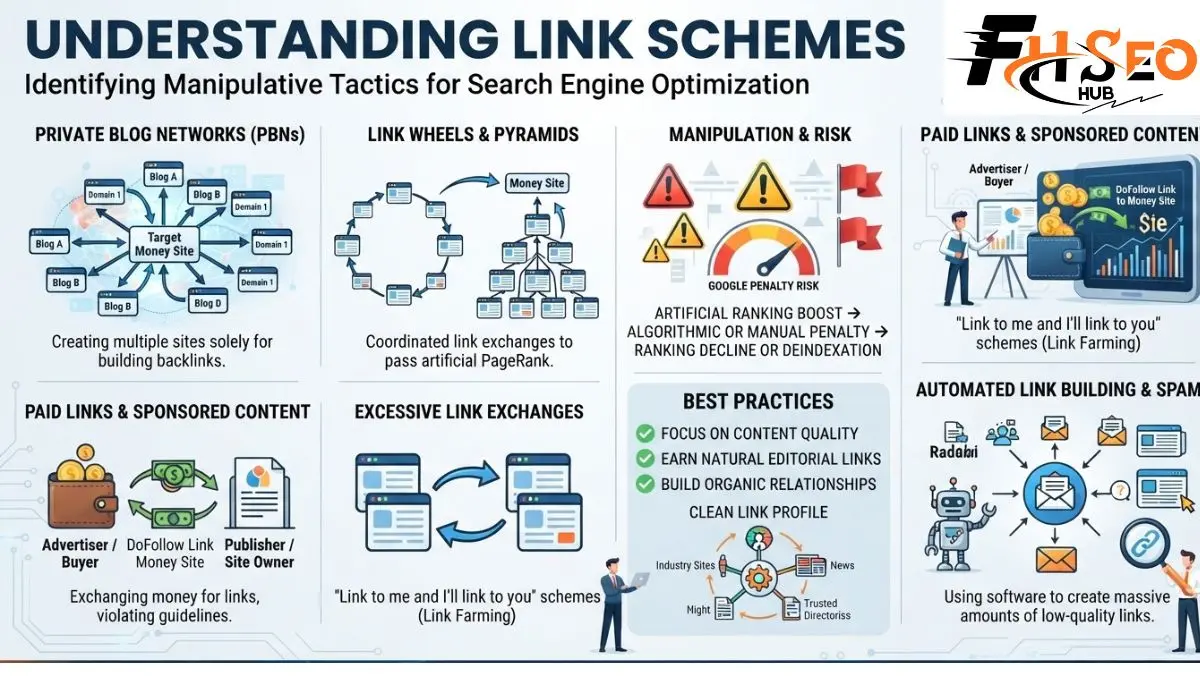
Link schemes are practices that manipulates links, incoming or outgoing, with the primary intent of manipulating PageRank or a site’s ranking in Google Search results, covering everything from buying backlinks to running a private blog network. Google’s spam policies treat link schemes as a violation, and detection has improved enough that a tactic working today can trigger a penalty within weeks once a pattern gets flagged.
What Is a Link Scheme?
A link scheme is any link building practice whose primary purpose is manipulating rankings rather than earning genuine editorial value. It covers both links pointing to your site and links you place on other sites. Google’s guidelines apply the same standard to both directions: a link scheme built to boost your own rankings and a link scheme you run to help someone else’s rankings violate the same policy.
The practical test most practitioners use: would this link exist if search engines didn’t exist? A journalist linking to original research because it strengthens their article passes that test. A paid placement in an unrelated blog post, or a site joining a reciprocal circle purely to trade authority, doesn’t.
Google’s Official Guidelines on Link Schemes
Google’s guidelines define a link scheme as any link intended to manipulate PageRank or ranking position. The policy explicitly names buying or selling links that pass ranking value, excessive link exchanges, large-scale guest posting or article campaigns run primarily for link acquisition, and automated link building programs as violations. The policy covers both link building and link selling equally.
Paid links require a rel=”sponsored” or rel=”nofollow” attribute to stay compliant, and the absence of that attribute is itself the violation, not the payment. Requiring a customer or partner to link back to you as a condition of a business relationship also falls under this policy. This is a pattern that shows up more often in software terms of service and partnership agreements than most site owners realize.
Why Link Schemes Are Harmful
Link schemes corrupt PageRank as a relevance signal, letting sites with bigger budgets or better vendor connections outrank genuinely better content by manufacturing authority instead of earning it. Left unchecked, this breaks the basic premise search rankings are supposed to reflect: that visibility tracks merit, not spend.
The harm compounds beyond the individual site running the scheme. A functioning link scheme degrades search quality for everyone searching a given topic, and it wastes the budget of every site owner who paid for placements that get devalued or trigger a manual action once detected. The financial and reputational cost of a penalty routinely exceeds what compliant link building would have cost in the first place.
How Google Detects Link Schemes
Google detects link schemes primarily through SpamBrain, which evaluates link graph patterns, anchor text distribution, and network-level signals across a site’s entire referring domain profile. It doesn’t judge individual links in isolation. A single suspicious link rarely triggers anything. A pattern across many links does.
Network-level analysis became a first-class detection signal following a significant SpamBrain upgrade in August 2025. That upgrade specifically improved Google’s ability to map coordinated linking activity across multiple sites at once, not just evaluate one domain’s backlink profile in isolation. This matters directly for structured schemes like link wheels and PBNs, since the whole point of those structures is coordination across a network, and that coordination is exactly what network-level analysis is built to surface.
Sudden link velocity changes are a specific, reliable signal within this analysis. A batch of new links appearing within a short window reads as manufactured rather than earned. That’s especially true when they come from sites with no prior connection to the target’s niche, regardless of how individually legitimate each linking site looks on its own.
Types of Link Schemes
Link schemes span a wide range of structures and sophistication, from simple paid placements to coordinated multi-site networks, and understanding the differences matters because detection risk and severity vary meaningfully between them.
| Type | Structure | Risk Level |
| Paid Links (undisclosed) | Direct payment for a link with no sponsored/nofollow attribute | High, straightforward manual action target |
| Private Blog Networks | Controlled group of sites built to link to one target | Very high, entire network penalized if detected |
| Link Farms | Low-quality sites mass-producing thin content to sell links | Very high, easily detected by pattern analysis |
| Link Wheels | Circular structure, sites link to each other and a central target | High, network-level analysis targets this structure directly |
| Link Pyramids | Tiered structure, lower tiers feed authority up to a target | High, similar detection risk to link wheels |
| Reciprocal Links (excessive) | “I’ll link to you if you link to me” at scale | Moderate to high depending on volume and relevance |
| Automated Link Building | Software or services generating links at scale with no manual review | Very high, pattern is easy to detect |
| Widget Links | Embeddable widgets that inject a footer link on every site that installs them | Moderate to high, depends on widget’s genuine utility |
| Comment and Forum Spam | Links dropped in blog comments or forum posts with no genuine participation | Low individually, contributes to broader pattern risk |
| Directory Submissions (low-quality) | Mass submission to generic, low-relevance directories | Low to moderate, mostly ineffective rather than dangerous |
| Hidden Links | Links styled to be invisible to users but visible to crawlers | High, treated as inherently deceptive |
Link wheels and PBNs get compared often, and the structural difference is real. A link wheel’s sites typically host thinner, more purpose-built content than a well-disguised PBN aims for, though PBNs can also use a circular structure. The meaningful distinction isn’t the shape of the network, it’s whether the linking sites have genuine editorial standards and independent value, or exist purely to pass authority.
Widget links deserve specific mention since they’re easy to underestimate. A genuinely useful widget, a calculator, a badge, a tool, that happens to include an attribution link is different from a widget built primarily as a link-distribution mechanism disguised as a utility. The test is the same one that applies everywhere else: would this link exist without the ranking benefit attached?
How to Identify a Link Scheme: Red Flags to Watch For
The clearest link spam red flags are an unnaturally high concentration of exact-match commercial anchor text, and links from topically unrelated sites with no logical reason to reference your content. A third is a sudden burst of new referring domains with no corresponding increase in content, PR activity, or brand mentions to explain it.
Shared infrastructure is a technical red flag worth checking specifically: linking sites that share hosting providers, near-identical templates, or registration patterns despite appearing unrelated on the surface. A vendor offering guaranteed placements at a flat, low price per link regardless of relevance is itself a red flag, since legitimate editorial review doesn’t scale that predictably or that cheaply.
Manual Actions vs. Algorithmic Penalties for Link Schemes
A manual action for a link scheme is issued by a human reviewer, appears explicitly in Google Search Console under “unnatural links to your site” or “unnatural links from your site,” and requires a reconsideration request to resolve. An algorithmic penalty happens automatically through SpamBrain and related systems, with no notification and no formal reconsideration process to appeal.
| Factor | Manual Action | Algorithmic Penalty |
| Notification | Explicit notice in Search Console | None, rankings just stop responding |
| Scope | Can target specific pages or the whole site | Typically affects the links’ passed value site-wide |
| Recovery process | Remove or disavow, then reconsideration request | Clean the profile, wait for reassessment |
| Typical timeline | Several weeks after submission | Weeks to months, no fixed schedule |
Large-scale, coordinated schemes like PBNs or link wheels more often trigger the severe end of either category, sometimes affecting the entire site or even the hosting provider if a network spans multiple domains on shared infrastructure. Smaller, isolated instances of low-quality links are more likely to see quiet algorithmic devaluation than a full manual action.
How to Recover From a Link Scheme Penalty
Recovery starts with a full backlink audit to identify every link tied to the scheme, followed by genuine outreach to request removal before turning to Google’s disavow tool as a fallback for links that can’t be removed directly. Google explicitly wants to see documented removal attempts, not just a disavow file, when reviewing a reconsideration request.
For a manual action, submit the reconsideration request only after completing removal outreach and disavowing what couldn’t be removed, documenting the specific actions taken. Expect the review to take several weeks once submitted, sometimes longer for large-scale or repeat violations. For algorithmic devaluation, there’s no formal review process, only a genuinely cleaned profile and time for Google’s systems to reassess it, a process that commonly takes weeks to months depending on how contaminated the profile was.
Don’t over-disavow as a precaution. Links you have no genuine evidence were part of a manipulative scheme generally don’t need disavowing, and removing value that was quietly helping the site adds a second problem on top of the first.
How to Build a Natural, Sustainable Link-Building Strategy Instead
Building a sustainable link strategy means earning editorial links through genuine content value, real digital PR, and relevant guest contributions on sites with real editorial standards. Skip any structure designed primarily to pass authority instead. Every tactic on this list should pass the same test link schemes fail: would this link exist without the ranking benefit attached?
Diversify link sources deliberately rather than relying on one channel or vendor, since a natural profile reflects a mix of editorial mentions, resource page inclusions, digital PR coverage, and genuine guest contributions, not a single repeated pattern. Track referring domain quality and relevance over raw count, and audit your existing profile periodically, since even a compliant strategy can accumulate risk if a past vendor’s tactics shift without disclosure.
Conclusion
Link schemes cover a wider range than most site owners assume. This category of black hat SEO spans everything from an obviously undisclosed paid link to a sophisticated, network-coordinated link wheel, and Google’s detection has improved enough that the structural sophistication of a scheme matters less than it used to. Every version fails the same basic test: the link exists to manipulate rankings, not because it earned its place. Build a link profile that would survive a human reviewer looking closely at every single placement, and the entire category of risk this guide covers stops being relevant to your site.
FAQs
Any link intended to manipulate PageRank or ranking position counts. This includes buying or selling links, excessive link exchanges, automated link building programs, large-scale guest posting campaigns run primarily for link value, and requiring links as a condition of a business relationship.
No, network-level link-graph analysis, strengthened significantly since a major SpamBrain upgrade in August 2025, specifically targets the coordinated, circular linking pattern a link wheel produces. The structural sophistication that once helped disguise this tactic no longer provides meaningful protection.
No. Disavow links you have genuine evidence were part of a manipulative scheme, not everything a toxicity checker flags. Random, low-quality links you had no involvement in generally don’t need disavowing, and over-disavowing can remove value that was quietly helping your rankings.
Normal link building earns links through genuine content value, relationships, and editorial merit. A link scheme manufactures links specifically to manipulate rankings, regardless of whether money, reciprocal agreements, or automation is the mechanism. The distinction is intent and method, not the platform or format involved.
Rarely on its own. Google’s detection systems evaluate patterns across a site’s full referring domain profile, so an isolated low-quality link is usually absorbed without consequence. A pattern of many similar links, especially from a coordinated network, is what triggers a manual action or algorithmic devaluation.


