What Is Link Velocity? The Speed of Gain and Lose Backlinks

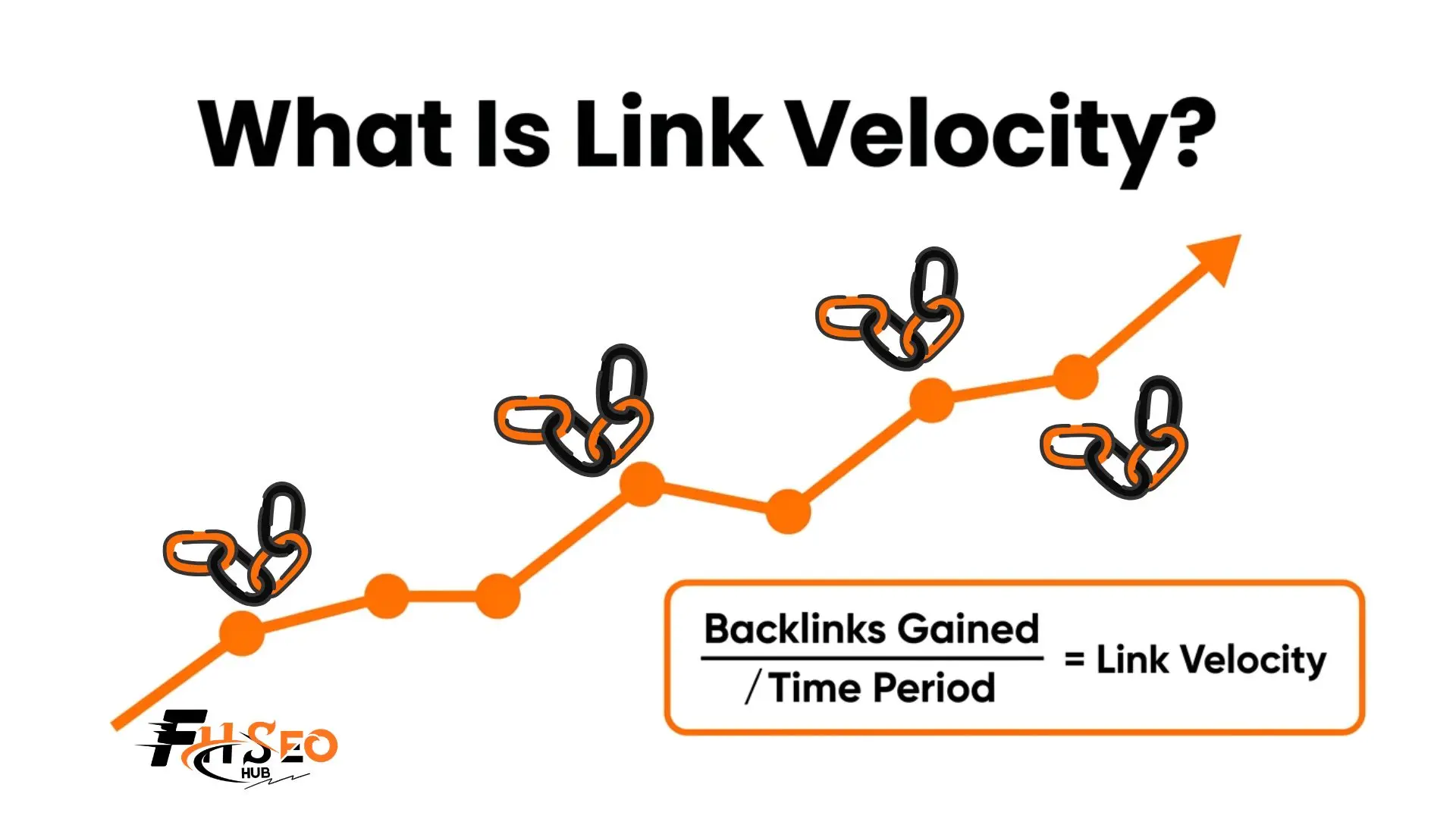
Link velocity is the rate at which a website gains or loses backlinks over a specific time period. It is measured in new backlinks per day, week or month. A natural, consistent rate signals organic growth. A sudden spike from low-quality sources can alert Google’s spam detection and put your rankings at risk.
The formula is simple:
Link Velocity = Number of New Backlinks / Time Period in Days
Example: 1,516 new backlinks gained over 33 days equals roughly 46 backlinks per day.
There are three core types:
A fourth concept, competitive link velocity (CLV), compares your backlink acquisition speed directly against top competitors using Ahrefs Site Explorer or Semrush Backlink Analytics.
Where Does Link Velocity Concept Come From?
The idea that backlink growth rate matters to Google goes back to Google Patent US7346839B2 (2003), titled “Information Retrieval Based on Historical Data.” The patent states that “a spiky rate of growth in backlinks may signal an attempt to spam search engines.”
A second patent, US8407231B2, addressed document scoring based on link-based criteria, confirming that Google monitors the time-varying behavior of links, including when they appear and when they disappear.
Gary Illyes, Google Search Relations, has stated that “link velocity” is a term coined by the SEO community, not Google. Google never uses this label officially.
Matt Cutts, former Head of Google Webspam, regularly warned about unnatural link patterns. The SEO community built this concept around those signals.
The term is an industry construct. But the underlying behavior it describes, monitoring backlink profile growth patterns over time, is documented in Google’s own patents. That distinction is important.
Is Link Velocity a Google Ranking Factor?
No. It is not a direct ranking factor.
John Mueller, Google Webmaster Trends Analyst, confirmed: “It’s not so much a matter of how many links you get in which time period.
But context matters here. Two sides to this debate exist:
Supporting its indirect influence:
Against treating it as a ranking factor:
Unnatural growth patterns can trigger Google’s spam detection system or a manual review, which absolutely impacts rankings. Calling it a direct ranking factor is inaccurate. Ignoring it entirely is also a mistake.
Link Velocity Trends (LVT): The Advanced Metric
LinkResearchTools (LRT) coined and trademarked “Link Velocity Trends” (LVT) in 2011. It gives a far more precise picture of your link profile momentum than a raw backlink count.
LVT runs on a scale from -99% to +100%:
LRT measures four sub-metrics to build this score:
| Sub-Metric | Time Window | What It Tells You |
| LV4m | Last 4 months | Short-term growth burst |
| LV6m | Last 6 months | Medium-term momentum |
| LV12m | Last 12 months | Annual growth trend |
| LV24m | Last 24 months | Long-term authority direction |
LVT is calculated by comparing LV24m against LV4m. If your recent 4-month growth outpaces your 24-month average, you have positive momentum. If it lags behind, your backlink profile is declining. Understand it early a real edge in diagnosing domain health.
How Search Engines Interpret Backlink Growth Patterns
Google’s crawlers monitor the time-varying behavior of links across the web. They track when a backlink appears, when it disappears and whether the pattern makes sense for the type of site involved.
Here is how Google reads the signals:
The Google Penguin Update (April 2012) was a turning point. It targeted sites using link schemes and unnatural acquisition patterns. Some websites was penalized and temporarily removed from Google’s index for running a coordinated paid link campaign that produced an obvious unnatural spike.
The March 2024 Core Update doubled down on quality over quantity. Sites relying on bulk link building saw significant ranking drops.
Natural vs Artificial Backlink Growth
Understanding the difference is the foundation of a healthy link building strategy.
Natural backlink growth looks like this:
Artificial backlink growth looks like this:
| Natural Growth Signals | Artificial Growth Red Flags |
| Gradual month-over-month increase | 100+ links appearing in one week |
| Varied anchor text distribution | 80%+ exact-match anchors |
| Links from DR 40+ relevant domains | Links from DA 5-10 unrelated blogs |
| Diverse link types (editorial, contextual) | Sitewide footer links from one domain |
| Growth mirrors content calendar | Zero content published during the period |
| Referring domains from multiple countries | 90%+ links from one geography or IP range |
Good vs Bad Backlink Acquisition Speed
Characteristics of Good Backlink Acquisition Speed
Good backlink acquisition is consistent, relevant and builds credibility over time.
At FHSEOHub, when we onboard new SaaS clients, we target 8 to 15 new referring domains per month in months one through six. This builds a clean, credible growth curve without triggering red flags.
Characteristics of Bad Backlink Acquisition
Bad backlink acquisition destroys the trust you have built. And it is easy to do by accident.
What Does a Healthy Backlink Growth Curve Look Like?
A healthy curve is gradual, consistent and believable. Think of it as a gentle upward slope. Not a cliff and not a flat line. A consistent rise that matches your business activity.
Benchmarks by site type for 2026:
When a spike is completely natural:
Sudden spikes are not always bad. The key question is: what caused it?
The Notion Mail launch in early 2025 is a clear example. Hundreds of tech and productivity publications linked to them overnight. Google does not penalize a spike tied to a genuine PR event. It rewards it through QDF.
A spike driven by viral content, a product launch or a major press placement is natural. A spike with no corresponding business event is a red flag.
Always compare your referral domain growth against your top 5 niche competitors in Ahrefs or Semrush. A rate that looks aggressive for a local bakery may be completely normal for a SaaS startup. For a tailored breakdown, read our guide on link velocity for SaaS.
What Is Internal Link Velocity?
Internal linking cadence is the frequency with which you connect your own pages together as your site grows.
Every new article you publish should include:
This directly supports:
A consistent internal linking cadence is a core part of any healthy backlink growth momentum strategy. It is often the most underused lever in technical SEO.
How to Calculate Link Velocity (Step by Step)
Step 1: Choose your time period. 30 days is the recommended starting point.
Step 2: Pull your data. In Ahrefs Site Explorer, go to Backlinks, set the filter to “New,” and select your date range. In Semrush Backlink Analytics, use the Indexed Pages report with a date filter.
Step 3: Divide. 420 new backlinks over 30 days equals 14 backlinks per day.
Net velocity is more meaningful than gross. Subtract lost links from new ones.
Example: 420 new links minus 120 lost links equals a net gain of 300, or 10 per day.
Quick benchmarks:
For the full step-by-step measurement walkthrough with tool screenshots, read our guide on how to measure link velocity.
The Core Takeaway
Understanding what is link velocity means understanding that speed is not the goal. A steady 8 to 15 new referring domains per month, built through guest posting on DA 40+ publications, digital PR and niche edits, will outlast and outperform any bulk link campaign. And it does so without risking everything you have built.


