
Ego Bait & Link Gratitude: A Link Building Guide

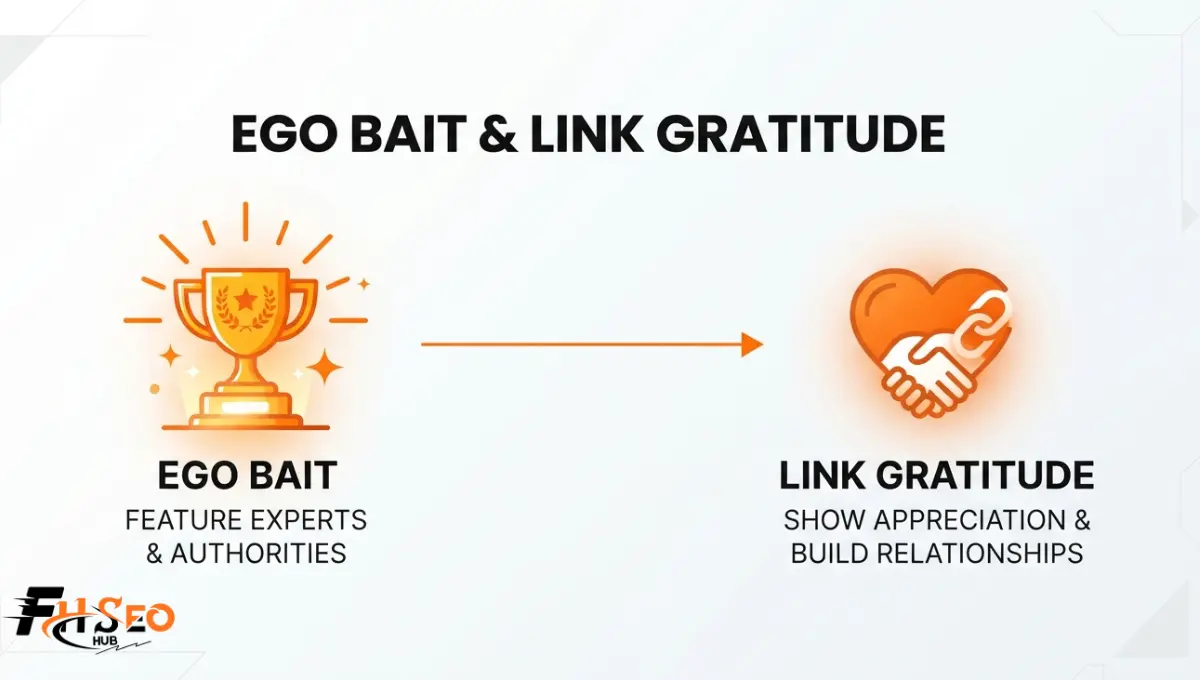
Ego bait content features real people, brands, or tools by name, betting that being included makes them want to share and link to it. Link gratitude flips the same idea around: instead of hoping someone links to you, you thank the people who already did. Both work for a simple reason. People act on flattery and recognition more reliably than on a cold pitch that offers them nothing.
Most guides treat ego bait as a synonym for “make a listicle and hope.” That’s how you end up with a roundup nobody shares, because the people on it can tell they’re being used as bait and not featured as anything real. Influencer outreach built on flattery alone gets ignored fast; a genuine blog mention that adds real context is a different thing entirely.
What Is Ego Bait Content?
Ego bait content mentions specific people, brands, or products in a way designed to get their attention, on the theory that most people will notice when they’re named and are likely to share or link to something that makes them look good. A roundup post, an interview, an award list, or even a single sentence crediting a tool by name can all function as ego bait, depending on how the piece is built and who it’s aimed at.
The mechanism runs on basic human psychology, not a search algorithm trick. People check their own name. They screenshot mentions. They forward things that flatter them to their own audience. Ego bait borrows that instinct and points it at a link.
How Does Ego Bait Content Work?
You publish something that names real people or brands, then let those mentions do the outreach for you, or reach out directly once the piece is live to make sure they’ve seen it. A roundup of tools you actually use, paired with an email telling each vendor they made the list, is a common version: BuzzStream has documented this exact pattern, referencing tools in a post and then emailing each one directly. Roundup features work the same way at larger scale, since the sheer number of people included means at least some share the piece even without direct outreach.
The people or brands featured have a genuine reason to link, share, or embed the content, because it reflects well on them. That’s different from asking a stranger to link to something with no upside for them. Flattery content works here specifically because it creates the upside first and asks for the link second, sometimes without asking at all, since a flattered mention often gets shared on its own. Even a genuinely useful tool for spotting timing, checking Google Trends for when a topic is picking up interest before you publish, can make the difference between a roundup that lands and one that arrives after everyone’s already moved on.
Types of Ego Bait Content
Link Gratitude: Thanking People Who Already Linked to You
Link gratitude means going back to the people already linking to you and thanking them directly, rather than treating every backlink as a transaction that ends the moment the link goes live. Thanking linkers doesn’t require a production; a short, specific email, or a simple mention on social media, telling someone their link mattered and why keeps the relationship open for the next piece of content instead of letting it go cold.
This costs almost nothing and gets skipped constantly. Most sites treat a backlink as the finish line. Reaching out afterward, even briefly, is one of the few link building moves that costs no content production at all and still moves a relationship forward. A linker who’s been thanked is more likely to link again, share your next piece, or mention you when a journalist or podcast host asks who they’d recommend.
How to Create Ego Bait Content: Step-by-Step
- Pick an angle with a real, specific question. “Best local SEO strategy” or “biggest link building mistake you’ve made” gives people something concrete to answer, unlike a vague prompt that produces generic quotes nobody wants to share.
- Build a list of people worth featuring, checked for real domain authority and an actual audience, not just a name you found on Google. Ahrefs or Semrush can confirm whether a prospect’s site carries enough authority to make the link worth pursuing in the first place.
- Reach out before publishing, not after, so contributors know they’re included, can correct how they’re described, and have a reason to promote the piece the moment it goes live.
- Write the piece so it stands alone as a genuine resource. A roundup with real insight and structure gets cited and linked; a list of names with one-line quotes reads as filler and gets ignored.
- Notify everyone featured once it’s published, with a direct link to their specific mention so they don’t have to search the page for their own name.
- Track what actually converts to links, not just replies or thank-you messages, and refine future outreach around which angles and formats produced real backlinks.
Email Outreach Template for Ego Bait and Link Gratitude
Ego bait notification:
Subject: You’re featured in [Post Title]
Hi [Name],
I just published [Post Title], and included your take on [specific topic] because [specific reason, their tool, their take, their result].
Here’s the direct link to your section: [link]
No ask here, just wanted you to see it. Feel free to share if it’s useful to your audience.
Link gratitude:
Subject: Thanks for linking to [Page Title]
Hi [Name],
I noticed [Site] linked to [Page Title], thank you. It’s already sending real traffic our way, and I wanted you to know it’s appreciated.
If there’s ever anything on our end worth linking back to, or a topic you’d want a quote on, let me know.
Keep both short. A three-paragraph thank-you reads as a pitch in disguise, and people notice.
Benefits of Ego Bait Content
Backlinks earned this way tend to be relevant by default, since the people featured already operate in your niche and their audience overlaps with yours. Referral traffic often follows directly, particularly when a well-known contributor shares the piece with their own following rather than you having to drive all the traffic yourself.
Social sharing happens without much extra effort on your part, since flattery is one of the more reliable triggers for someone to post something to their own network. And the relationships built through real outreach, not just the one-time mention, tend to produce more collaboration and more links down the line, which link gratitude specifically reinforces.
Common Mistakes: Avoiding Pushy or Insincere Flattery
Padding a roundup with fifty names to chase more social shares dilutes the value for everyone included, since nobody wants to be one anonymous entry in a list that reads as a numbers game rather than genuine recognition. A listicle built entirely around who might link back, with no real editorial judgment behind who’s included, reads as exactly that to the people on it, and they can usually tell.
Sending an outreach email that opens with obvious, generic flattery, “your work is truly inspiring,” before asking for a share, comes across as a pitch wearing a compliment as a disguise. Following up more than once or twice after a mention notification crosses from friendly into pushy fast, and a single well-timed message outperforms three reminders. Skipping the actual outreach after publishing an otherwise well-built roundup wastes most of the tactic’s value, since the mention alone rarely travels as far as a direct nudge does.
Conclusion
Ego bait works because it flatters honestly instead of asking for something with nothing offered in return, and link gratitude works because most sites never bother to say thank you at all. Build content around people who deserve to be featured, reach out before and after publishing, and treat every existing backlink as a relationship worth maintaining rather than a box already checked. Do both consistently and the links tend to follow the same pattern real relationships always do: they compound.
FAQs
It’s content that features real people, brands, or tools by name specifically because being mentioned gives them a reason to share and link to it, relying on genuine recognition rather than a cold outreach pitch with no upside for the recipient.
Yes, current industry guidance confirms it remains effective even after Google’s Helpful Content updates, specifically when the content is a genuinely useful resource rather than a thin list built purely to bait shares.
Ego bait creates new backlink opportunities by featuring people who don’t yet link to you. Link gratitude strengthens existing relationships by thanking people who already linked, encouraging future links rather than chasing a first one.
Keep it short, specific, and free of generic compliments. Reference the exact reason someone was included and link directly to their section, without an obvious ask for a share attached to the message.
Yes, notification is what converts a mention into an actual link or share most of the time. A roundup nobody’s told about rarely gets the traction the format is capable of on its own.


